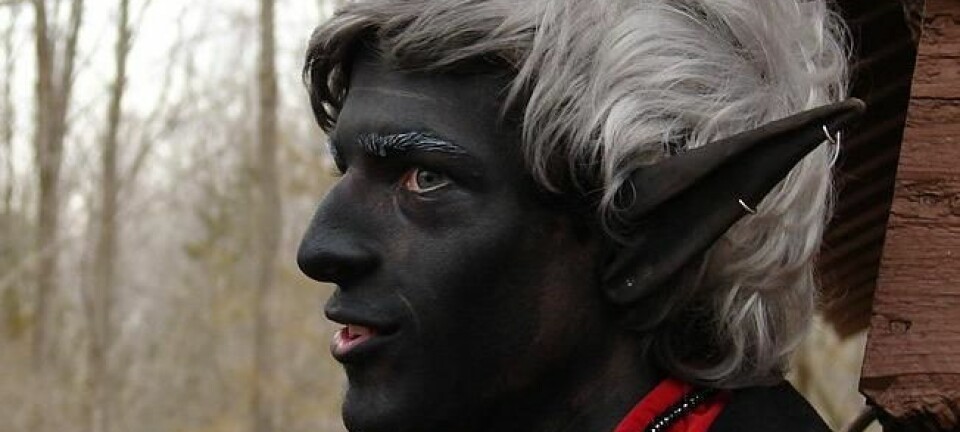
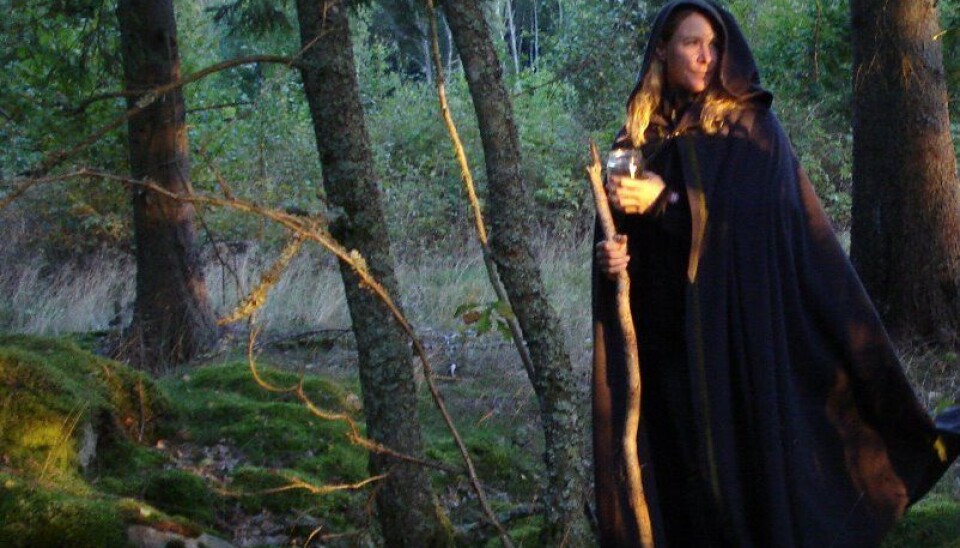
Your Danish friend may be a witch
Witches in present-day Denmark keep their craft secret – and one in four of them is probably a man.
If you go to Denmark and mingle with the locals, chances are you’ll meet a witch.
The country has hundreds of witches working in a variety of regular day jobs, such as carpentry, nursing, hairdressing, or accounting.
But in their spare time, they meet in witch circles and practice magic, an extensive anthropological study of present-day adult witches in Denmark reveals.
“It is quite possible that people are acquainted with a witch without knowing it,” says Anne Mia Steno, a research assistant at the Danish Folklore Archives, who authored the article Parallel Worlds – Magical Practice Among Modern Witches in Denmark.
“What has been interesting in this study was to see that witches can be men and women and that they come from a whole range of different lines of work.”
An underground society
Many of the witches keep their practice secret because they are worried that their friends will judge them.
The witches are well aware that performing magic rituals on moonlit execution hills is not generally perceived as normal behaviour.
Some witches are shamans
Steno’s study indicates that Danish witches are a highly diverse group. They are found in all age groups and each defines their own worldview. There are kitchen witches, herbal witches, eclectic witches and asatro witches, to name but a few.
They have also found their way to the witch environment via different routes:
- Some witches are fascinated with the alternative – clairvoyance and healing – and even make a living by practising it.
- Others attend the so-called Asa and Vanetrossamfundet, who believe in Odin, Thor and the rest of the gods from Norse mythology.
- Many have previously been involved in natural religions and shamanism,
- And finally, the largest group is made up of those who feel a special connection with nature.
There are currently around 500 witches in Denmark, about 20-30 percent of which are men.
The researcher says that it’s difficult to give a precise figure for how many witches are practising in Denmark. There is no official belief with a stable organisation. Because of this, an estimate can only be based on registrations of internet activities, summer camp attendance and interviews with contemporary witches.
“On that basis, I would say that there are currently around 500 witches in Denmark, about 20-30 percent of which are men,” says the researcher, who has immersed herself in the witch environment for six months in connection with the study.
Witches can change the world with the power of thought
Steno has focused her research on how modern witches use magic. Many witches believe they can use magic to influence their surroundings – and themselves. For example, they can:
The witches are gardeners, historians, carpenters, numerologists, nurses and consultants. Modern witches don’t live in quaint cottages.
- Use love magic to bind another person to them – although this requires that the person in question is interested in being bound.
- Influence the selection board at a place of work to hire a certain person.
“The witches believe that everything in our surroundings contains energy: the ground, air, stones, etc. By using magic it is possible to ‘bend’, i.e. influence, the energy with a view to using it for a specific purpose,” she says.
Most witches believe they can bend the energy by the power of thought alone. This means that it’s not necessary to summon a god or perform a ritual for the magic to work.
“So when they perform rituals during a full moon, the idea is to focus their thoughts to make the magic stronger. The magic isn’t really in the ritual itself.”
The symbol of the moon goddess on the forehead
One night in the fall of 2011, Steno participated in a witch ritual in celebration of the witch Sabbath ‘Mabon’. As it turned out, the ritual was meant to open the seven gates to the land of the dead.
The séance took place in the night with three witches named Hexe Hedenlil, Nanna StoneChild and Maja Calendula. They were gathered in a hut deep in the forests of Sweden.
The witches were standing naked on the cold autumn leaves. Black crescents were painted on their foreheads – the symbol of the moon goddess.
It was midnight and the moonlight made it possible to see when the witches put on seven pieces of ritual jewellery. There were rings, bracelets, wreaths, loincloths and necklaces, all sewn together with flowers, branches and berries from the woods.
Light symbolises the seven gates to the land of the dead
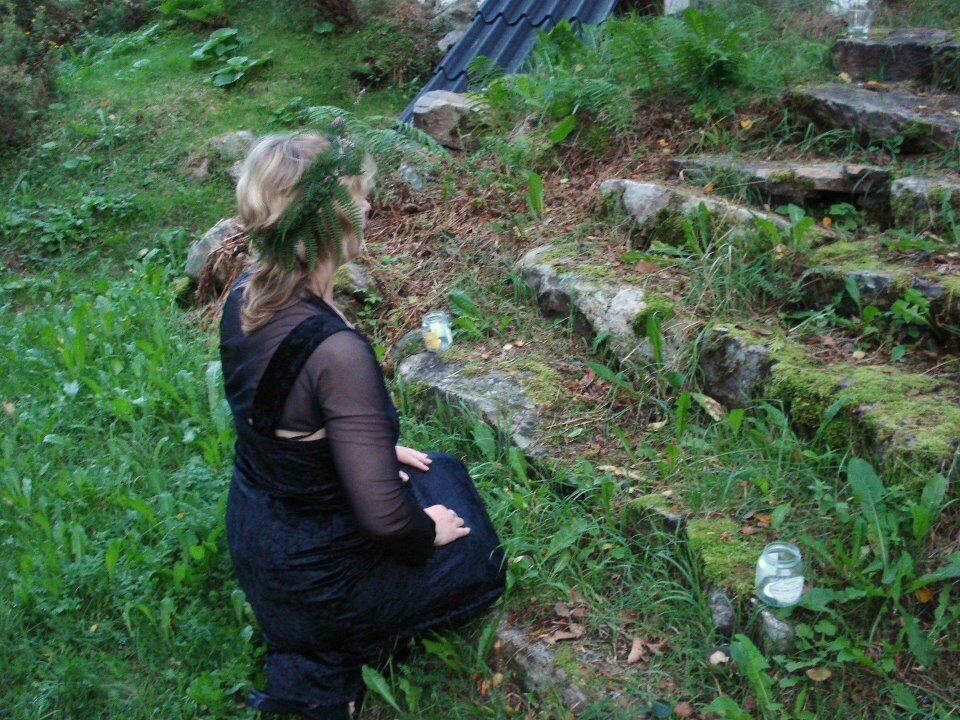
Together, the witches walked into a ploughed field, where they had mapped out a route in advance, using seven lit candles placed in little jam jars to protect them from the wind.
The three witches and the research assistant started out on their route. Each candle symbolised one of the seven gates to the land of the dead. When the witches passed one, they put down a piece of jewellery.
“With each piece of jewellery, a problematic feeling was removed and transferred to the land of the dead. The witches believe that humans follow the cycle of nature, which allows us to lay down certain feelings with the autumn leaves, leaving them to ‘hibernate’,” she says.
“Come spring, the feelings will re-emerge, but by then the witches will have developed personally and be better equipped to handle them in a new way.”
Nudity transfers the witch to another space
The witches finally arrived at a ritual site, where a large black pentagram has been painted on the forest floor. They started dancing to the beat of drums and howling at the moon.
When the intoxicating ritual was finished, they covered their naked bodies and walked back to the cottage.
“The witches create another time and place when they perform their rituals. That is also why they are naked during the Mabon ritual.”
Steno says that when witches are naked, they feel a stronger connection with nature. By feeling closer to nature they reach a place where nudity isn’t associated with shame or sexuality. Instead, they become part of nature and a spiritual community.
Witches want to change the world with magic
There are several reasons why our contemporaries take up witchcraft:
- They wish to live in closer connection with nature
- They want to change – for example by ‘burying’ their problems like in the Sabbath-ritual
- They want to magically alter the overly complex world around them
It’s very important to the witches to be closer to nature – to live the cycle of nature. In this way, they distance themselves from certain elements in modern society: the fast pace, and a preoccupation with money and television, says the researcher.
“But I actually believe that most witches have taken up witchcraft because they wish to change themselves and the world around them with magic.
“Many witches highlight the opportunity to influence their own lives, whereas in the classic religions you depend on a god to come and change things for you.”
Magic is in a grey area
The witches believe that magic can have great consequences for their own life as well as the lives of others.
“Because of this, the witch scene is marked by moral guidelines,” she says.
”For example, they say: ‘Everything you do will return threefold’ – in other words, everything you do will also affect you.”
In the Middle Ages, it was commonly believed that there was black magic and white magic. Black magic was used to do dark deeds like summoning sickness or death. White magic was used to do good, like healing the sick.
However, modern witches believe that medieval notions of magic were overly simplified.
“Modern witches know how hard it is to foresee the consequences of magic. They talk about how magic is always a grey area. Even though a witch is trying to do something positive, it can easily lead to something negative.”
‘Good’ magic can lead to bad things
One witch has told a story about how she performed a ritual for a friend. The purpose was to bring her luck at a job interview. The friend got the job. Even though this was good news for her, it was bad news for all the applicants who were not offered jobs.
“There are also stories of what the consequences can be when you try to use magic to attract the person you are in love with,” says Steno.
“It can turn out that the couple actually fight like cat and dog. But when they are bound together by magic, they can’t let go of one another. Stories like that serve as moral guidelines. They call for consideration of the long term consequences.”
Today being a witch is a matter of choice
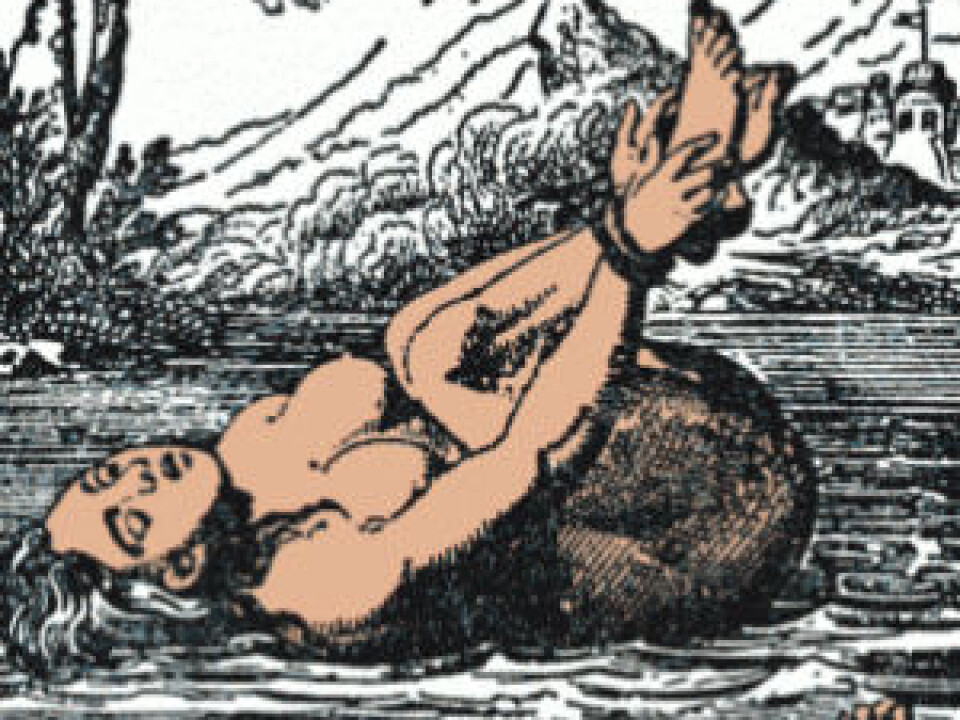
The worries that haunt present day witches are fundamentally different from those of their historic predecessors. In the 15th century, witches risked being accused of sleeping with the devil and getting burned at the stake for it.
Because of this, ‘Witch’ became a horrible brand that was best avoided. Today people choose to become ‘witches’ because it helps them manage life in the busy modern society.
Steno’s article has been published in the latest issue of the peer-reviewed Danish journal Kulturstudier.
The study is part of the Danish Folklore Archives´ theme about faith and magic in everyday life that runs until 2014.
-------------------------------
Read this story in Danish at videnskab.dk
Translated by: Iben Thiele