Melanoma crushed by the body’s defence
Immune cells from cancer patients in a Danish hospital are proving successful for fighting melanoma. The new treatment may also work on other forms of cancer.
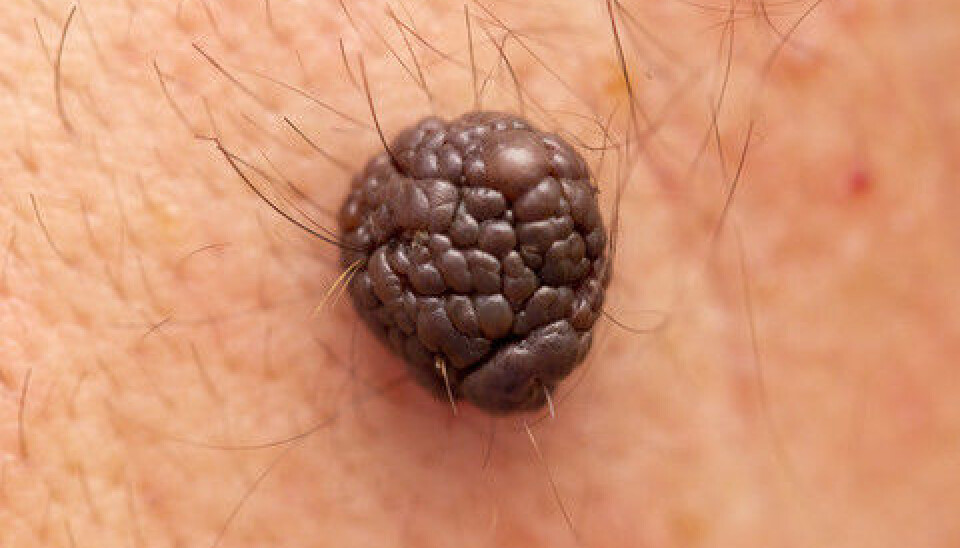
Melanoma is a type of skin cancer and is the leading cause of death from skin disease.
So far, the disease has been regarded almost as a death sentence when it has started to spread to other parts of the body.
However, a new hospital study using a treatment form known as cell-based immunotherapy may offer hope for melanoma patients.
By treating patients with their own T-cells, the defence forces of our immune system, researchers can kick-start the immune system and make it destroy the cancer cells.
The new method could potentially offer hope and be an effective treatment against several forms of cancer. The successful use of the method, however, requires that the tumour contains large amounts of T-cells.
”We’re currently only testing with melanoma, but the method can presumably also be used against other types of cancer such as kidney or colon cancer,” says Inge Marie Svane, a professor at Copenhagen University and the head of Herlev Hospital’s Center for Cancer Immune Therapy (CCIT).
“Most types of cancer contain T-cells, so in principle, T-cell therapy could potentially become a form of treatment for many types of cancer.”
T-cells give new hope against cancer
The new treatment method works by having T-cells removed from the patient’s own cancer tissue. The cells are grown in a laboratory, so that they become highly active and multiply to billions of cells, explains the professor.
The T-cells are then injected back into the patient’s bloodstream, after which they start attacking metastases and kick-start the immune system.
Patients whose melanoma has spread only survive nine months on average, but the new treatment appears to prolong the patients’ lifespan and in some cases it can even cure these patients.
Much better results than the standard treatment
The researchers have so far analysed the results for 12 of the 14 patients who have received the new treatment.
“Half of the patients have had a successful treatment. In 20 percent of them, all signs of cancer have disappeared completely,” she says.
“Compared to the standard treatment, where the success rate is around 15 percent, this looks very promising.”
Svane is, however, keen to point out that the method has only been tested on relatively few patients. The first patient was treated three years ago, so the long-term effects are still unclear.
Putting T-cells into pole position
Before the T-cells are put back into the body, the patient receives a short but intensive chemoterapy treatment to optimise the functionality of the T-cells.
The T-cells are accompanied by an immune-stimulating substance known as interleukin-2, which boosts the immune system when the T-cells are transferred back to the patient.
”The chemotherapy displaces the other immune cells, giving more space for the T-cells. You could say that with the chemotherapy and interleukin-2, we’re trying to control the immune system to strengthen the effect of the T-cells,” she says.
The first trials with the new method were carried out in the US with promising results.
”What we’ve done differently in Denmark is that we have used less interleukin-2, which suggests that there’s no need for huge doses of the substance. The side effects of interleukin-2 are considerable, so that’s a good thing.”
Could become standard treatment in 4-5 years
The standard treatment for melanoma that has spread also uses immunotherapy with interleukin-2 and chemotherapy.
This treatment, however, does not include T-cell therapy, which the researchers behind the new study hope can become part of the standard treatment as early as 4-5 years from now.
However, larger clinical trials are needed before the new method can be approved by the health authorities.
”The next phase starts later this year. It will be a much larger study with more than 300 patients, in collaboration with researchers from Holland and England,” says Svane.
In the long term, the researchers also aim to study whether the effect of the treatment can be further improved by combining the T-cell treatment with other forms of treatment.
----------------------------------
Read the Danish version of this article at videnskab.dk
Translated by: Dann Vinther