

Job strain leads to lethargy
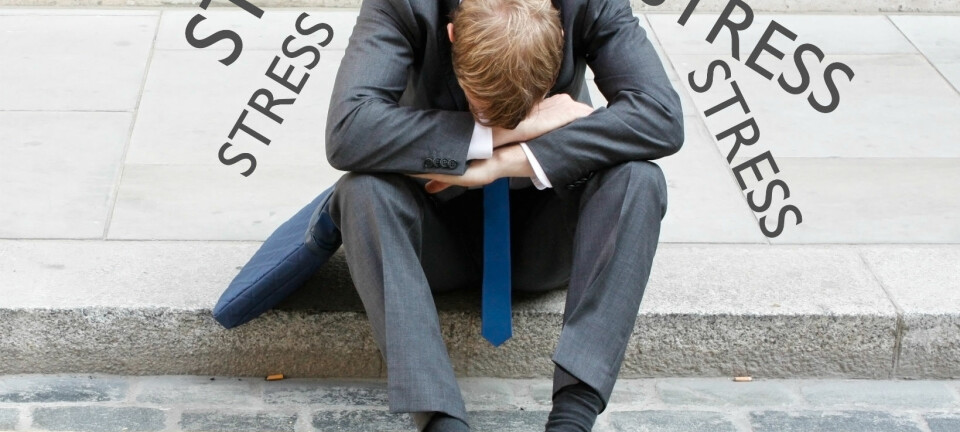
If you are stressed at work there’s less chance you will spend your off-hours at a gym or exercising.
A European study links stress at work with a lack of physical activity when off-duty.
“The less control you have over your work, the higher the odds you will be physically inactive in your spare time,” says Anders Knutsson, a professor of public health at Mid Sweden University.
The conclusion is from a meta-analysis – a study combining results from several smaller studies. It’s based on data from 14 European countries covering 170,000 employees.
Among these are Denmark, Sweden and Finland.

Defining job strain
Researchers defined job strain by dividing everyone into four categories based on two criteria: How much control people feel they have in their daily work, and the amount of work they think they have.
- Low load (good control, little amount of work)
- Active (good control, large amount of work)
- Passive (poor control, little amount of work)
- High load (poor control, large amount of work)
Those with good control of their work fared best, regardless of whether they had little or considerable amounts of work.
Persons with little control on the job were hardest off. Here too, it didn’t matter whether they had plenty or little to do at work. These persons partook in 25 percent less physical activity during their leisure hours than those in the two best categories.
Cause or effect?
Although the meta-analysis finds a relation between work stress and physical activity, it gives no answer to its cause. Which came first?
It could be that stress at work makes people less physically active but perhaps people who exercise a lot off work are better at tackling stress on the job.
So the researchers sought causes in follow-up studies.
Stress leads to inactivity
They found there was a tendency for people who had previously been physically active to become physically inactive when in a stressful job. The indication is that work stress affects the amount of exercise people engage in, rather than the other way round.
The results also seem to confirm that people with large workloads need more rest and restitution. The problem for passive workers is they lose faith in their own capabilities, which in turn leads to an inactive lifestyle.
“This is an enormous study in a respected journal,” says Professor of Medicine Egil Wilhelm Martinsen at the University of Oslo.
He explains that the method for defining job strain is logical and commonly used. Independence, demands and support are key factors here.
If you have little work autonomy, are shouldering high demands and receiving insufficient support, you probably have a lot of stress at work.
More active than inactive
In real numbers – independent of comparisons − 19 percent with low loads were physically inactive, as against 25 percent for those with a high load.
Women comprised 50 percent of the persons selected in the meta-analysis, and their average age was 43.5 years.
The work is part of a greater collaboration among European universities, called the IPD-Work Consortium. The study was published in the American Journal of Epidemiology earlier this month.
----------------------------
Read the Norwegian version of this article at forskning.no




.gif)