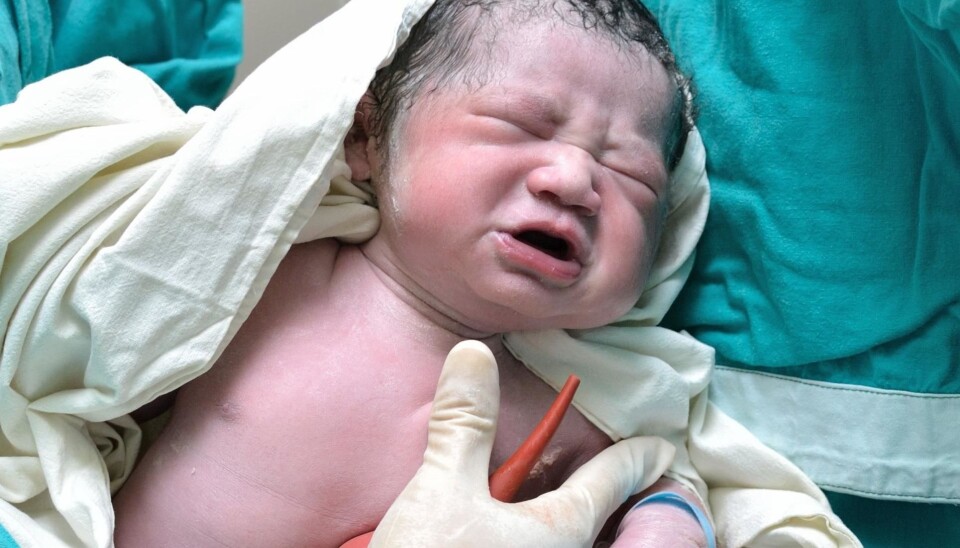
Giant study links C-sections with chronic disorders
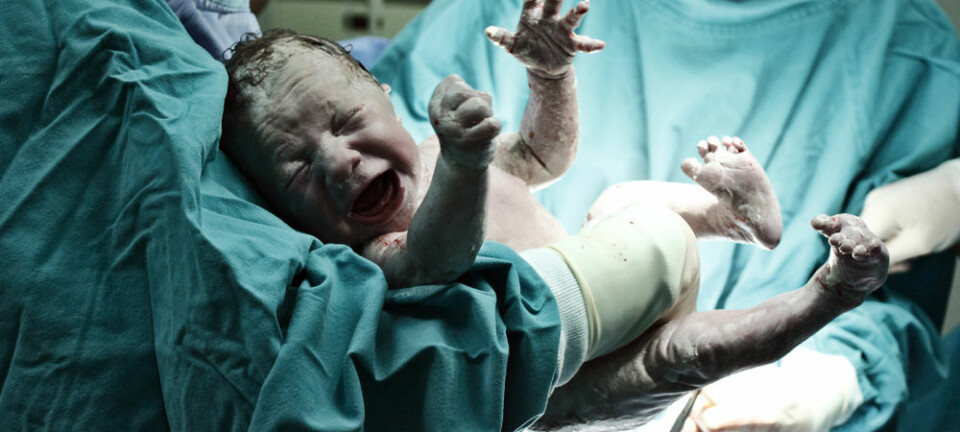
People born by C-section, more often suffer from chronic disorders such as asthma, rheumatism, allergies, bowel disorders, and leukaemia than people born naturally.
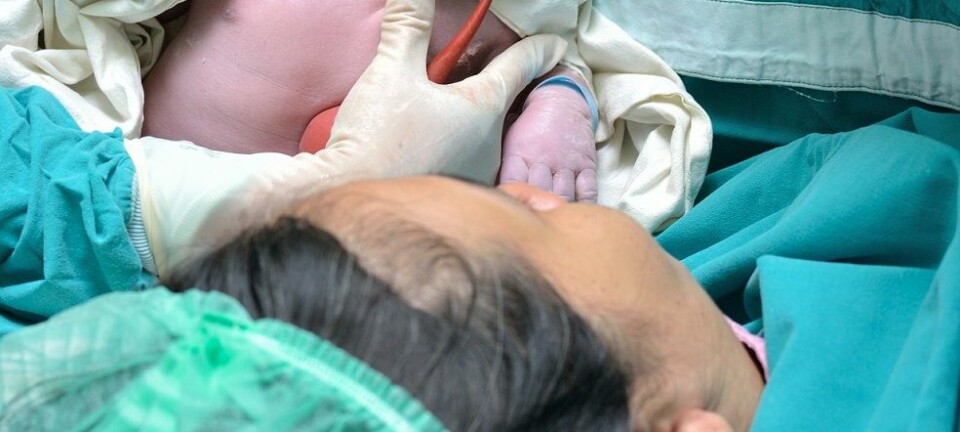
Babies who enter the world through a Caesarean delivery face much greater risks of developing a range of chronic immune disorders caused by defects in the immune system, compared to people delivered naturally. That’s the conclusion of a new study by Danish scientists.
"We have shown, for the first time, that Caesarian sections can constitute a joint risk factor the several immune disorders -- both childhood disorders such as asthma and allergies, and those which develop later in life," says Professor Hans Bisgaard from the Danish Child Asthma Centre at Copenhagen University Hospital in Gentofte.
Children born by C-section more frequently hospitalised
In the study, recently published in the journal Pediatrics, Bisgaard and colleagues examined the correlation between C-sections and immunological disorders in two million Danish children born over a period of 35 years between 1973 and 2012.
The scientists were able to determine from the Danish register of births that:
-
Children born by C-section have been more frequently hospitalised than those born vaginally due to asthma, juvenile rheumatoid arthritis, inflammatory bowel disorder, immune system defects, leukaemia, and other tissue disorders during their lives.
- More specifically, the risk of developing asthma is 20 per cent higher if you are born by C-section. The researchers conclude that there is an approximately 40 per cent greater risk of developing immune defects and a 10 per cent greater risk of developing juvenile rheumatoid arthritis.
Extremely robust results
Niels Heegaard, a professor of clinical biochemistry and researcher into immunological disorders at Statens Serum Institut (SSI), was not involved in the new study but read the article with interest.
"It's the biggest study I've ever seen that finds a correlation between Caesarian delivery and asthma and tissue-immune disorders. Other smaller studies have detected links between C-sections and asthma and allergies but here the researchers are looking at a much larger number of children born over a period of 35 years. The scope of the study makes the results extremely robust," says Heegaard.
Caesarian delivery does not necessarily lead to disorder
Although you face a higher risk of developing one of the above-mentioned disorders if you are born by Caesarian delivery, it doesn’t necessarily mean it is the surgery itself that causes you to become ill, emphasises Bisgaard.
"The study shows that babies born by C-section developed one of the above-mentioned disorders more often than those born vaginally, but it does not show a direct causal relationship. There are various reasons why children born by C-section more often become ill," says Bisgaard.
Cause not yet clear
Several studies have previously shown that children born by Caesarian delivery face a greater risk of developing asthma, allergies, and type I diabetes, but this is the first time a single study establishes a correlation between C-section and a number of chronic immune disorders.
The reason why babies delivered by C-section develop chronic disorders more frequently has not yet been established, although research has shown both mice and humans born by C-section have a different bowel bacteria composition than mice and babies born normally. Another recent study showed that C-section mice also have problems with their immune system.
So, although it looks as though the surgical intervention itself affects both the immune system and the bowel bacteria composition, there may be other reasons -- both genetic and environmental -- as to why children delivered by C-section are particularly susceptible to falling ill.
"We know that a number of genes are common to several of these immune disorders. Caesarean section may be one of many environmental factors that activate the genes concerned causing people to become ill," says Bisgaard.
More studies of immune system needed
Professor Heegaard from the SSI says there isn’t adequate evidence that the C-section surgery itself damages the immune system.
"The experiments we’ve done involving the delivery of mice by Caesarian section has formed the basis the new hypotheses, but they have been carried out under heavily controlled conditions and cannot be directly applied to humans," says Heegaard.
"There is a need for research that studies the immune molecules and cells of infants born normally and by Caesarian section, respectively, before we can be sure that there’s a causal relationship between C-sections and immunological disorders," he says.
Several of the studied immunological disorders have in common that they affect an increasing number of people in the Western world. The same increase has not been documented in developing countries.
For instance, the occurrence of asthma and allergies have tripled over the last 50 years. During the same period, an increasing number of women in the Western world have had babies delivered by Caesarian section.
-------------------
Read the original story in Danish on Videnskab.dk
Translated by: Hugh Matthews